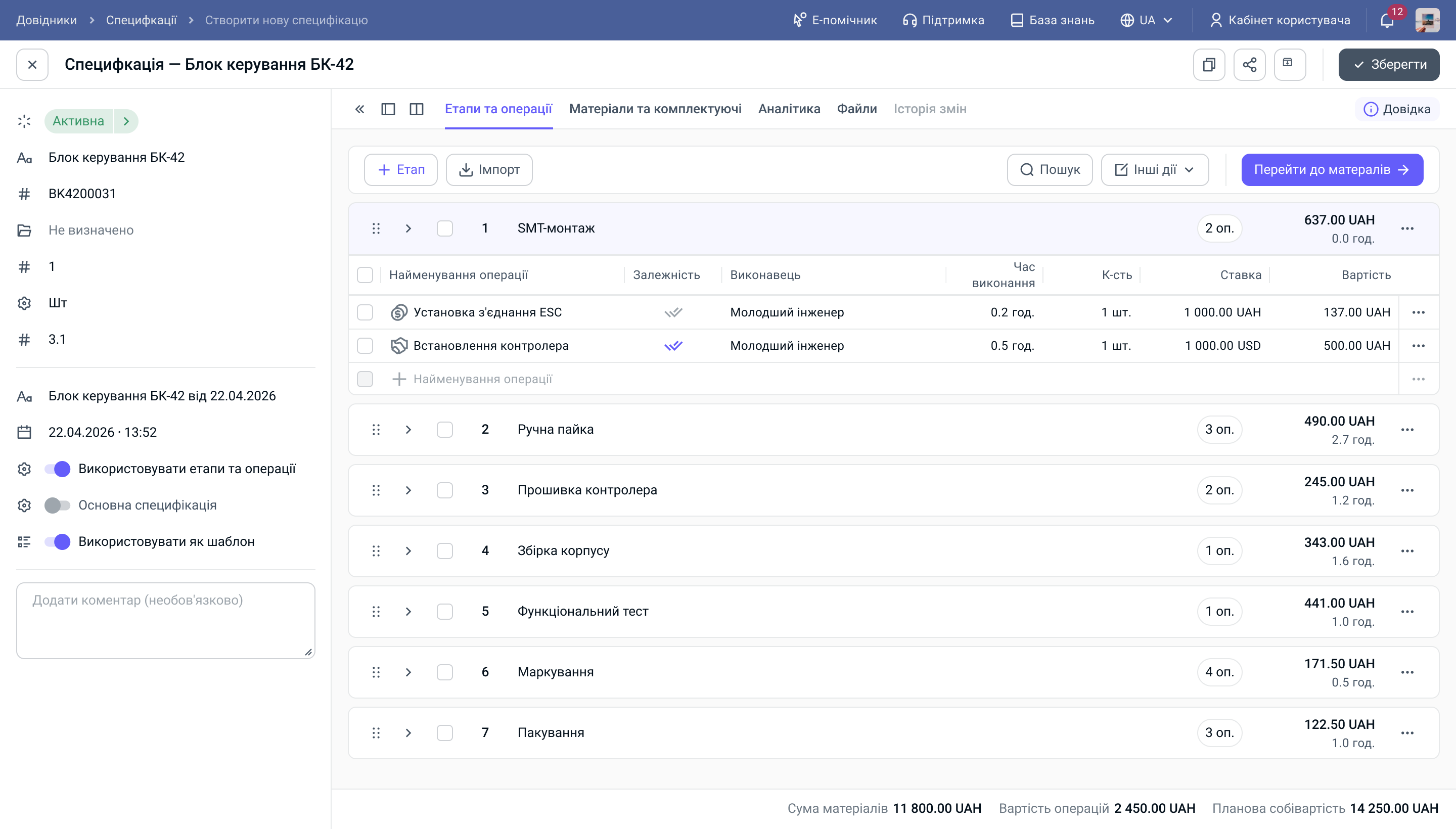
You know the actual cost of every product.
Not an “approximate Excel figure”, but a number you can sign a
contract on: materials, labor, and overhead are calculated by the
system, not by intuition.
Explore the demo yourself — no registration or phone call.
Launch in 2–4 weeks
No workshop downtime
Onboarding with an analyst
0
+
companies use Bimp
0
%
system uptime
0
+
years of ERP expertise on the team
0
days
minimum time to live accounting
Bimp in the media
ForbesЕкон. правдаDOUAINITC.uaVectorMinddev.ua
Our clients include defense manufacturers. We do not publish their
names for security and NDA reasons. Instead, we show the results.
Sound familiar?
The bigger the operation, the less it can see itself
Excel handles the first batches. At scale, blind spots appear:
You cannot calculate true cost
Components are purchased in foreign currency, assembly is
piece-rate, and defects are not accounted for. Actual cost is
unknown, so contracts are priced “approximately”. You are not
sure how much you really earn on each product.
Purchasing cannot be planned
Component demand is not tied to the production plan and orders.
Either cash is frozen in excess stock, or assembly stops because
one part is missing.
Production cannot be controlled
Dozens of orders are in progress. You do not know what stage
each batch is at or where a delay occurred. Customer status
questions are hard to answer, and planning turns into daily
meetings.
Inventory lives a life of its own
Raw materials, semi-finished goods, and finished products are
tracked in separate spreadsheets. Units and variants get mixed
up. Managers sell items that are no longer in stock.
Solution
Follow one product through the entire process
Here is the “BK-42” control unit. We will take it through the system
from routing sheet to margin.
How an FPV manufacturer moved from Excel in 14 days
We do not name the company — NDA. Everything else is shown as it is.
FPV manufacturing · under NDA
“We did not stop the workshop for implementation”
≈ 300 drones/month34 employeesKyiv regionmigrated in 2025
Before:
cost was assembled manually from 4 spreadsheets and
foreign-currency invoices. Component shortages were discovered on
assembly day. Batch status was checked in chat.
0
days to live accounting
0
%
delivery delays
0
%
batches with traceability
We did not know the real cost. Now we see the cost of every batch
— including soldering, crashes, and the purchase exchange rate.
Most importantly, we did not stop production for six months to
implement the system; we simply started working in it.
— Head of Production, company under NDA
Industry expertise
Bimp speaks the language of your industry
Choose your area to see how the system handles the specifics of your
production.
How much does the system cost and what pricing plans are
available?
The price depends on the number of users and the selected
plan. Subscription billing is available monthly, quarterly,
or yearly (with savings). Most features are already
included: manufacturing, warehouse, finance, sales, and
analytics. Current plans are on the
Pricing
.
How is Bimp different from Odoo, 1C, or a CRM?
CRMs do not provide warehouse or cost control. 1C/BAS is
outdated, expensive to maintain, and carries
sanctions-related risks. Universal ERPs such as Odoo require
months of implementation and create dependency on an
integrator. Bimp is a specialized system with ready-made
manufacturing accounting logic: it launches in days and does
not require a developer for every change.
How does the system calculate cost?
Bimp calculates the full actual product cost: FIFO
components (including purchases in foreign currency),
piece-rate labor by operation, indirect costs (rent,
electricity, depreciation), and defects. The figure can be
justified to a customer, investor, or auditor.
How secure is it to store manufacturing data in Bimp?
Data is anonymized at the architecture level, encrypted at
rest and in transit, and distributed across independent
storage systems in certified EU data centers. Full access
belongs exclusively to the system owner — even the Bimp team
cannot identify a client from their data. Learn more on the
Data security
.
What integrations does the system support?
Banks:
PrivatBank, Monobank (automatic statements).
CRM:
KeyCRM, SalesDrive.
Delivery:
Nova Poshta.
Marketplaces and websites:
Rozetka, Prom, OpenCart, Khoroshop. For everything else,
there is an open Bimp API.
How does implementation work, and is support included?
We do not leave customers alone with the system. A
specialist helps migrate data from Excel or 1C, configure
processes, and train the team (from 10 hours of sessions) —
without stopping production. Live accounting typically
launches in 2–4 weeks. Video guides, a knowledge base, and
support chat are available.
Can I test the system before buying?
Yes. Explore the interactive demo yourself or schedule a
demo with a specialist. Data entered during the trial will
remain after you move to the full version.
See Bimp using your own manufacturing process
Choose a convenient calendar slot — an engineer will show how the
system fits your processes: routing sheets, cost, warehouse, and
finance.